Pro Cincinnati Locksmith Service Team
Local locksmith team
May 15, 2026 10 min read
Cincinnati winters don't ease you in gently. One morning you're scraping frost off your windshield on I-75, and the next you're standing in a Norwood driveway at 6 a.m., key snapped clean in the lock because the cylinder froze solid overnight. It happens every single year across the Tri-State — Hamilton County, Northern Kentucky, and into Clermont — and it's almost always preventable with a little seasonal prep.
This guide is written for Cincinnati homeowners and drivers who want real, practical steps to keep their locks working through January and February, and to know exactly what to do when the cold wins anyway. We'll cover everything from mortise lock maintenance to emergency car lockouts, and we'll be straight with you about when a DIY fix is enough versus when you need a trained professional on the way.
## Why Cincinnati Cold Is Especially Hard on Locks and Keys
The Ohio Valley sits in a freeze-thaw zone that's arguably tougher on hardware than cities that stay consistently sub-zero all winter. When temperatures swing between the mid-teens and the upper 40s in a single week — which is perfectly normal between December and March here — moisture works its way into lock cylinders, expands as ice, and puts pressure on pins and tumblers that were never designed to handle it. Door frames shift, strike plates drift out of alignment, and key cuts that worked fine in October suddenly bind against swollen or ice-packed components. Mortise lock assemblies, which are common in Cincinnati's older brick homes and commercial buildings in neighborhoods like Oakley, Hyde Park, and Over-the-Rhine, are particularly vulnerable because their internal mechanisms sit flush within the door edge and collect condensation from both sides.
Keys snap for a different but related reason. Cold metal is more brittle than warm metal, and a key that has a small existing stress fracture — invisible to the eye — can break at the bow the moment you apply extra torque trying to work a frozen cylinder. That's a worst-case scenario: now you have a broken key fragment lodged in a lock that still won't turn, and you need both a key extraction and a new key cut. Understanding why this happens is the first step toward stopping it before your next polar vortex.
## Practical Prevention: Protecting Your Mortise Lock and Other Hardware Before the Freeze
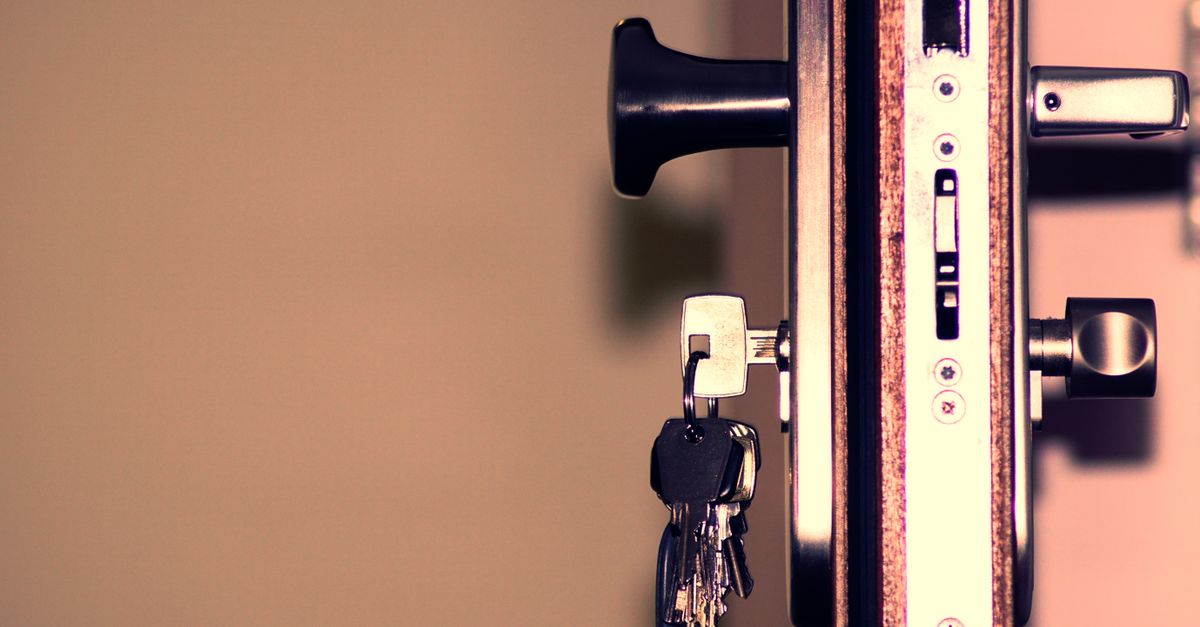
The single most effective thing you can do before temperatures drop is lubricate every lock cylinder in your home and vehicle. Skip WD-40 — it's a moisture displacer, not a true lubricant, and it can gum up pin stacks over time. Reach instead for a dry graphite powder or a Teflon-based spray. For a mortise lock, remove the lock body from the door if you're comfortable doing so, spray lubricant into the keyway, work the key in and out several times, and then apply a thin coat to the bolt and latch mechanism. For car door locks, use the keyway and also spray into the door jamb where the latch contacts the striker — both spots ice up independently. Kwikset and Schlage deadbolts respond well to this treatment and typically only need it once or twice per season.
Beyond lubrication, inspect your door frames now. A door that drags or doesn't close flush in October will be actively fighting you in January. Tighten hinge screws, check the strike plate alignment, and if your exterior door has a worn weatherstripping seal that allows drafts, replace it — that same gap lets moisture into the lock face. For commercial properties managing high-traffic entryways on Reading Road or in Blue Ash's office parks, consider asking a commercial locksmith to assess your door hardware before the first hard freeze. Catch a failing mortise lock mechanism in November and a service visit is straightforward; catch it in February when you're locked out of your business at opening time and the urgency is considerably higher.
## When It's Already Frozen: Safe Thawing Steps and When to Stop
If you walk out to a frozen lock, resist every instinct to force the key. The steps below are genuinely safe and won't damage your hardware. First, try commercial lock de-icer — a small aerosol available at most Cincinnati hardware stores and auto-parts shops. It's formulated to melt ice inside the cylinder without harming the mechanism. Insert the nozzle directly into the keyway and apply a short burst, wait 30 seconds, then insert your key with gentle, patient pressure — not a yank or a twist. For car door locks, a de-icer pen kept in your coat pocket (never in the car, obviously) is a wise winter carry. Second option: gentle heat. A hand-warmer packet held against the lock face for a minute or two can soften ice without the thermal shock that a lighter or boiling water would cause. Boiling water on a cold metal cylinder is a last-resort gamble that can crack the housing, warp the door, and void any warranty on the hardware — skip it entirely.
If gentle heat and de-icer don't work, or if you hear or feel resistance that suggests the cylinder is damaged rather than just frozen, stop. Continuing to force a compromised lock dramatically increases the chance of snapping your key or cracking the cylinder body. That's the moment to call an emergency locksmith rather than escalate the damage. Pro Cincinnati Locksmith dispatches mobile technicians throughout the Cincinnati metro — from Anderson Township to Covington, KY — so help is genuinely close. Call us at (704) 850-6756 any time, day or night, and we'll confirm an exact price before any work begins.
## Emergency Locksmith Services: What Happens When You Call Us in the Cold
We run 24/7 mobile operations, which means when a frozen cylinder or a snapped key turns your Tuesday morning into a crisis, a skilled technician is already in a van somewhere in the Cincinnati area rather than waiting at a fixed shop. For a broken key in lock scenario, our technicians carry extraction tools that remove the fragment cleanly without damaging the keyway, and a mobile key-cutting unit that can produce a new key on-site for most residential and vehicle locks — no tow truck needed, no locksmith shop trip required. A locksmith can make a new key from a lock itself in many cases, using impressioning or decoding techniques applied directly to the hardware, which is especially useful when an owner has lost their only copy. For homes with mortise lock assemblies, we carry replacement parts for common configurations so a seized or cracked mortise lock can often be repaired or replaced in a single visit.
What does an emergency locksmith cost in Cincinnati? The honest answer is that the final quote depends on several factors: the type of lock or vehicle involved, the time of day, travel distance to your location, and whether parts need to be replaced. What we can promise is that you'll receive a confirmed price before we touch anything — no surprise line items after the job. Regarding call-out fees, many locksmith services do include a dispatch or service-call charge that reflects travel time and fuel; we're transparent about this upfront so there are no billing surprises in an already-stressful moment. Our 25-plus services include residential lockouts, commercial lockouts, mortise lock repair and replacement, door knob lock service, car lockouts, broken key extraction, rekeying, high-security lock installation, master key systems, lock upgrades, mailbox lock replacement, garage entry lock service, safe opening, smart lock installation and troubleshooting, padlock removal, window lock service, sliding door lock replacement, cabinet lock service, intercom-integrated lock systems, access control for businesses, car key replacement, transponder key programming, ignition lock cylinder service, duplicate key cutting, and lock hardware sourcing — we buy direct from manufacturers and pass the advantage through to the final quote rather than marking up through a middleman chain.
## Staying Ahead of Next Winter: Project Services and Long-Term Lock Health
One of the most valuable calls you can make in late October — before the first hard freeze — is scheduling a residential or commercial lock audit. Think of it as a project service rather than an emergency: a trained Pro Cincinnati Locksmith technician walks every entry point of your property, tests every cylinder, checks mortise lock body alignment, assesses door frame integrity, and gives you a prioritized list of what to address before winter. For clients in Cincinnati's older housing stock — the brick doubles in Westwood, the Victorian-era homes on Observatory Hill — this kind of walk-through routinely turns up mortise lock hardware that hasn't been properly serviced in years and is one cold snap away from failure.
For business owners, the project service angle is even more critical. A commercial locksmith assessment covers not just individual cylinders but master key hierarchies, access control schedules, and whether your current hardware is rated for the traffic load your building handles. A restaurant on Vine Street that sees 300 people through its back-of-house door every week needs different hardware and a different maintenance schedule than a four-unit residential building in Mount Lookout. When you're ready to plan ahead, call (704) 850-6756 and we'll schedule a convenient time — no emergency surcharge, no pressure, just a straightforward evaluation and a clear up-front quote for any recommended work.
Frequently asked questions
Is there a mobile locksmith in Cincinnati?+
Yes — Pro Cincinnati Locksmith operates as a fully mobile service throughout the Cincinnati metro, including Hamilton County, Northern Kentucky, and surrounding Tri-State communities. Our technicians travel in fully equipped vans, meaning they carry the tools and parts to handle most residential, commercial, and automotive lock jobs on-site without requiring you to come to a shop. Whether you're off Madison Road in Oakley or on a side street in Florence, KY, we can dispatch a skilled technician to your location around the clock.
Do locksmiths charge a call-out fee?+
Many mobile locksmith services include a service-call or dispatch charge that covers travel time and fuel, and we are no different — but we are fully transparent about it. When you call (704) 850-6756, we'll ask for your location and the nature of the job, then confirm your complete price before any technician is dispatched. The factors that shape the total quote include your location relative to our nearest technician, the type of lock or vehicle involved, the time of day, and whether parts need to be sourced or replaced. There are no charges added after the job is complete that weren't agreed upon upfront.
Can a locksmith make a new key from a lock?+
In most cases, yes. When you've lost every copy of a key, a qualified locksmith can decode the lock cylinder — by reading the existing cuts through the keyway or by carefully disassembling and measuring the pins — and use that information to cut a working key from scratch. This technique works on the majority of residential deadbolts, door knob locks, mortise lock assemblies, and many vehicle locks. For high-security cylinders or transponder-equipped car keys, the process may involve additional programming steps, but our mobile units carry the equipment to handle these on-site for a wide range of makes and models.
What should I do if I need an emergency locksmith in Cincinnati, Ohio and I'm worried about cost?+
First, call and ask for a full price confirmation before agreeing to any work — any trustworthy locksmith will give you this without hesitation. The quote you receive reflects real factors: lock type, travel distance, time of day, and parts. If a quote feels unclear, ask the technician to break it down line by line. At Pro Cincinnati Locksmith, we confirm the exact price before starting so you're never making a decision blind. If you are facing genuine hardship, the best approach is to ask upfront whether the scope of work can be adjusted — for example, an emergency unlock service is a more contained job than a full lock replacement, and focusing on the immediate need first can help manage the overall cost. What we'd caution against is attempting to force or bypass a lock yourself, as this routinely causes damage that makes the final repair far more expensive than the original lockout would have been.